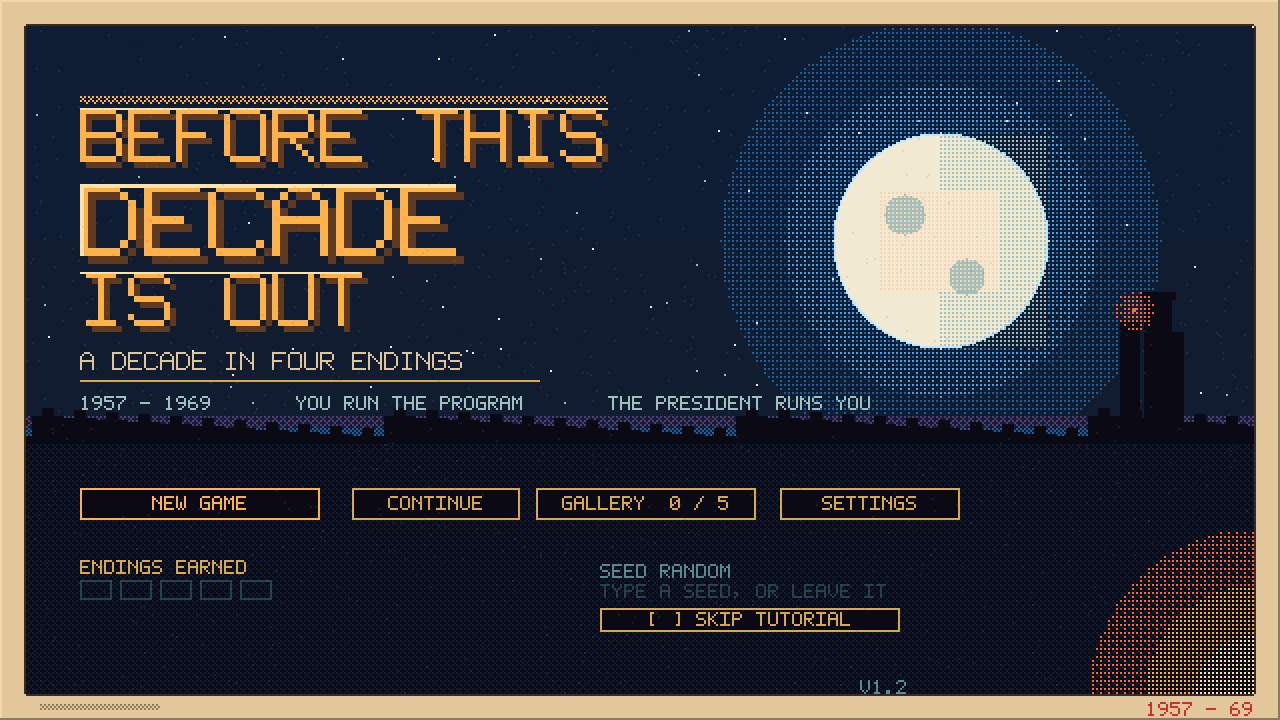
Free, in your browser, on a computer or a phone turned sideways. Your run saves as you go.
1957 – 1969 · YOU RUN THE PROGRAM · THE PRESIDENT RUNS YOU
October 1957. Sputnik is overhead, and the program is yours.
Pick the crews. Fight Congress for the money. Keep the President on side. Read the cables out of Moscow and decide which ones to believe. Then, in July 1969, decide what is said on the Moon.
TWELVE YEARS · SIX ACTS · 48 QUARTERS
The game moves three months at a time. Every quarter goes the same way.
- 1 READ
The briefing: headlines, a cable on Moscow, your five numbers.
- 2 DECIDE
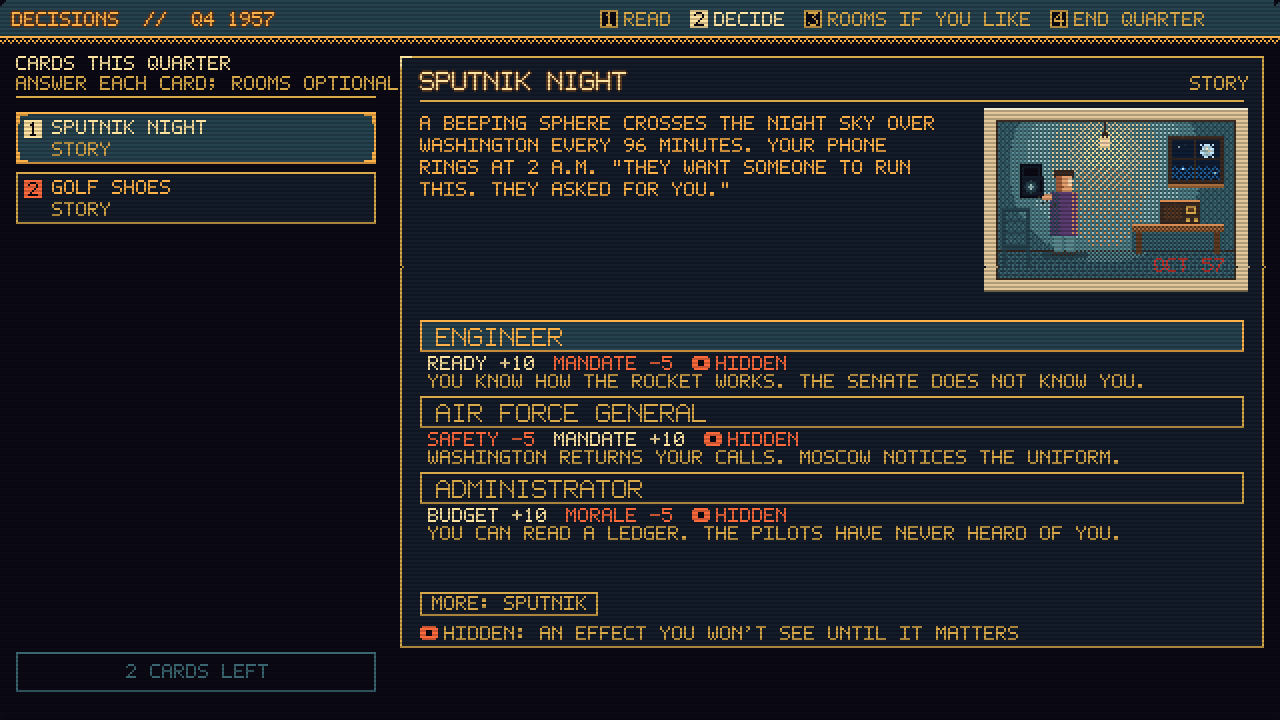
Answer the cards on your desk. Some effects stay hidden until they matter.
- 3 ROOMS, IF YOU LIKE
Two visits: the Oval Office, Mission Control, the test stand, the bar.
- 4 END QUARTER
Rockets fly, tests pass or fail, and Moscow makes its move.
-
ACT 0 · PROLOGUE
1957SPUTNIK NIGHT
A beeping sphere crosses the sky over Washington every 96 minutes, and your phone rings at 2 a.m. First you choose who you are: the engineer, the Air Force general or the administrator. Each one arrives with a secret, and it comes out if you get careless.
-
ACT 1 · CATCH-UP
1958–61THE FIRST SEVEN
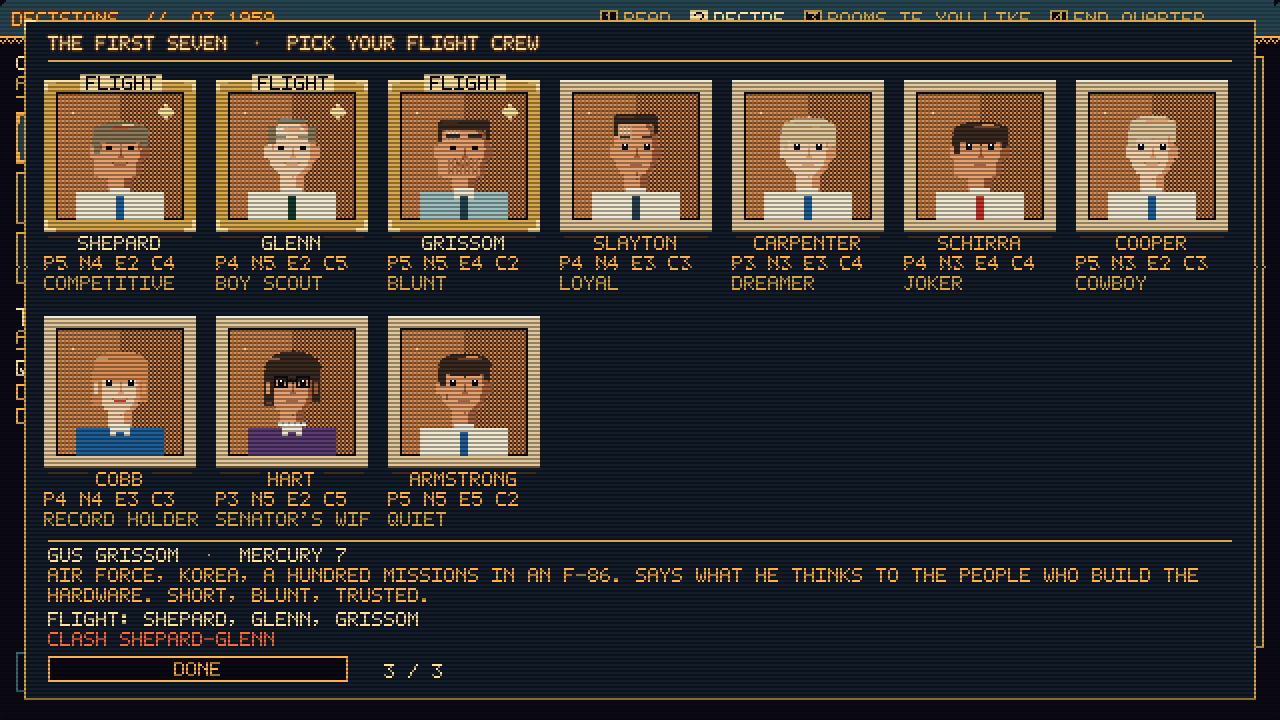
Ten files on the desk, and three of them fly. Two came from a clinic in Albuquerque, and the Vice President's office has already called twice. In April 1961 the headline depends on what you did in March. Then Kennedy asks for something he can win.
-
ACT 2 · ORBIT
1961–63OCTOBER
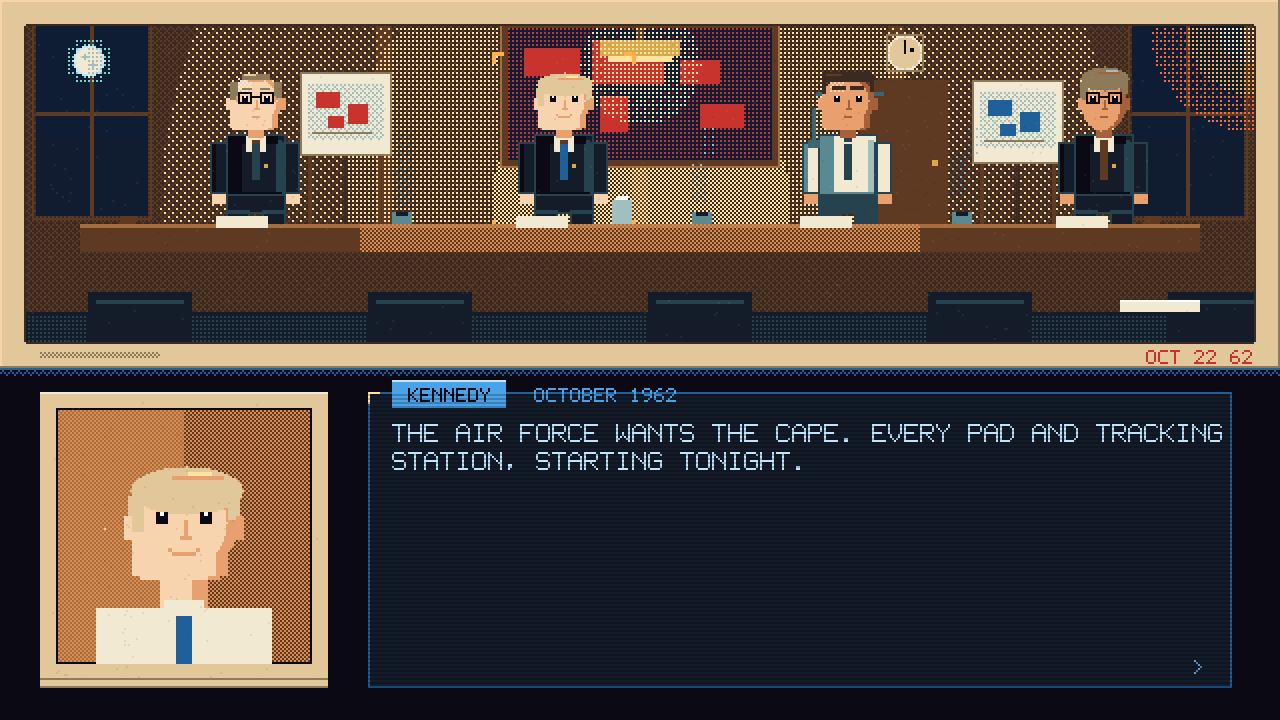
You choose how to get to the Moon and put a man in orbit. Then the Cabinet Room at two in the morning, maps on easels, the air blue with smoke, and the Air Force wants the Cape. A year later the phone rings with engines behind the voice.
-
ACT 3 · RENDEZVOUS
1964–66THE LEAK
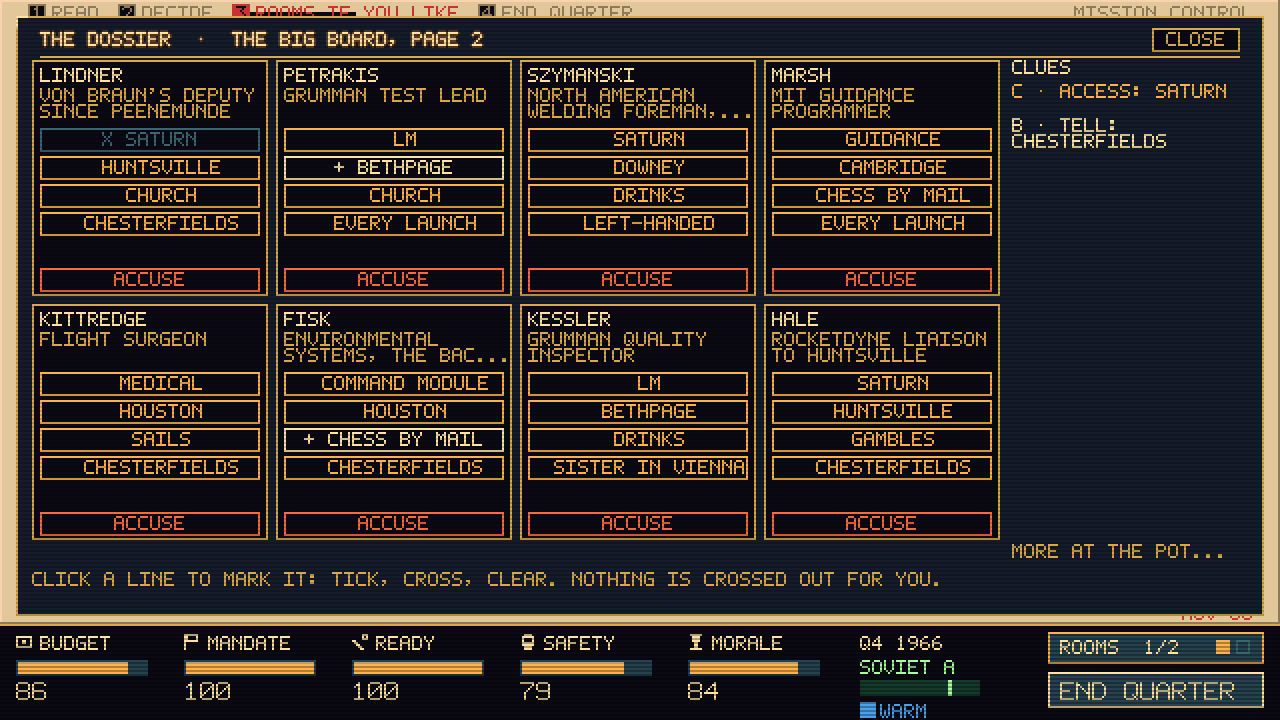
Gemini flies two at a time, so pick pairs who can stand each other. Then a cable from Helsinki: a Saturn drawing on a desk in Podlipki, with a coffee ring on it.
Yours do too.
Somebody in your building is talking. Eight folders, one mole. -
ACT 4 · FIRE
1967–68PLUGS-OUT
Pad 34, a Friday in January. Hatch sealed, three men on their backs. Whether it burns can come down to an unsigned memo that crossed your desk earlier:
The hatch opens inward. The cabin is pure oxygen. I am not sleeping.
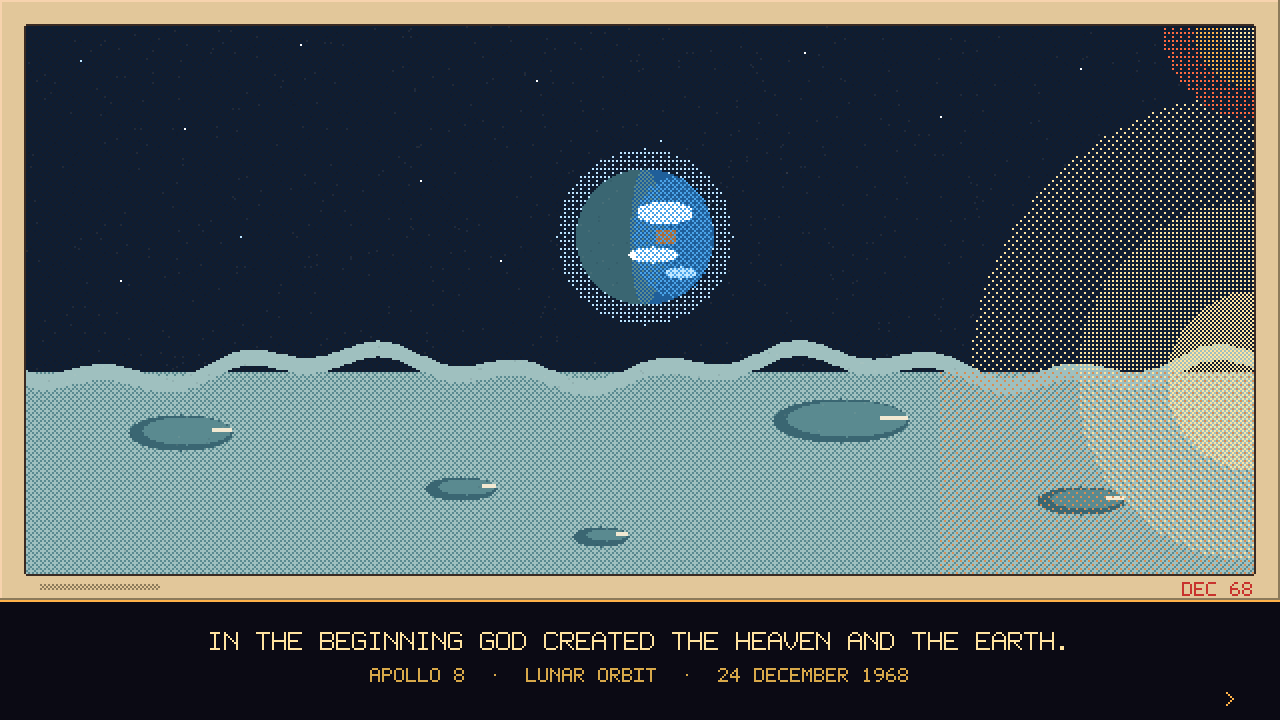
Get past it, and Christmas Eve is spent in lunar orbit. -
ACT 5 · GO
19691202
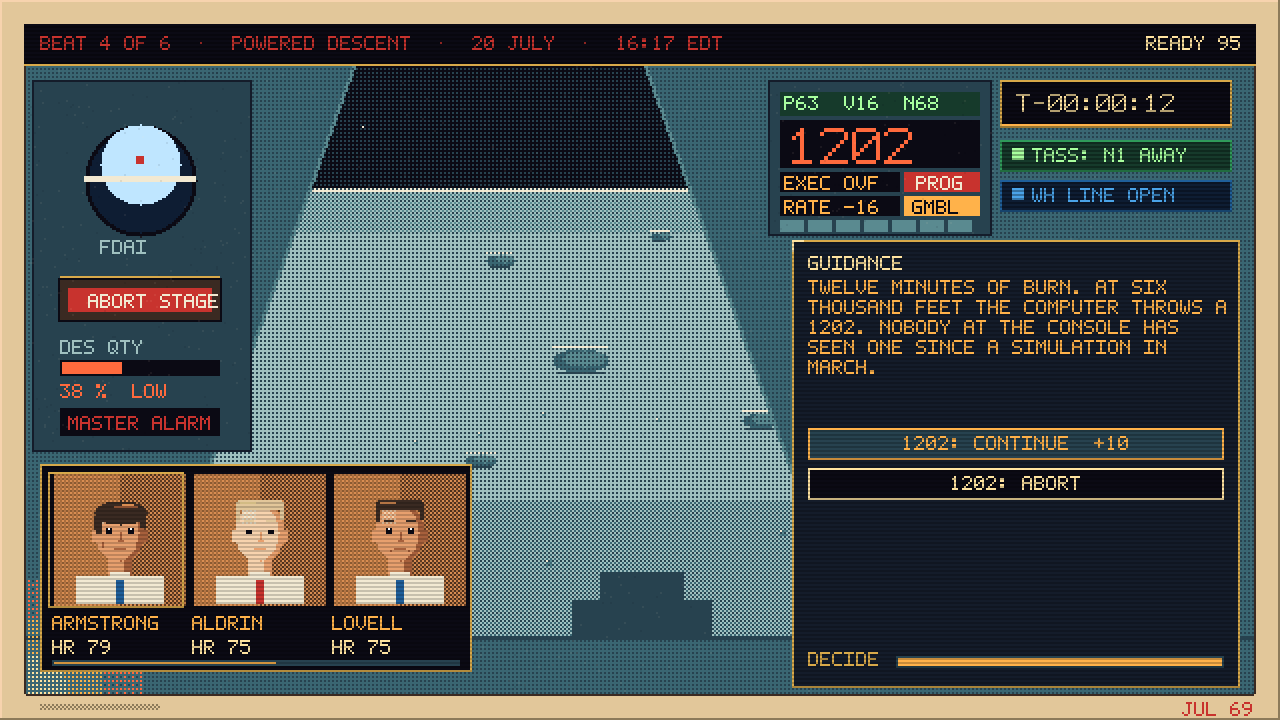
Slayton brings the chalkboard into your office: three names, and everything they think of each other in chalk. The President wants promises. Moscow may have a rocket on the pad. Twelve minutes into the burn, six thousand feet up, the computer throws an alarm nobody has seen since March.
WHAT DO YOU SAY?
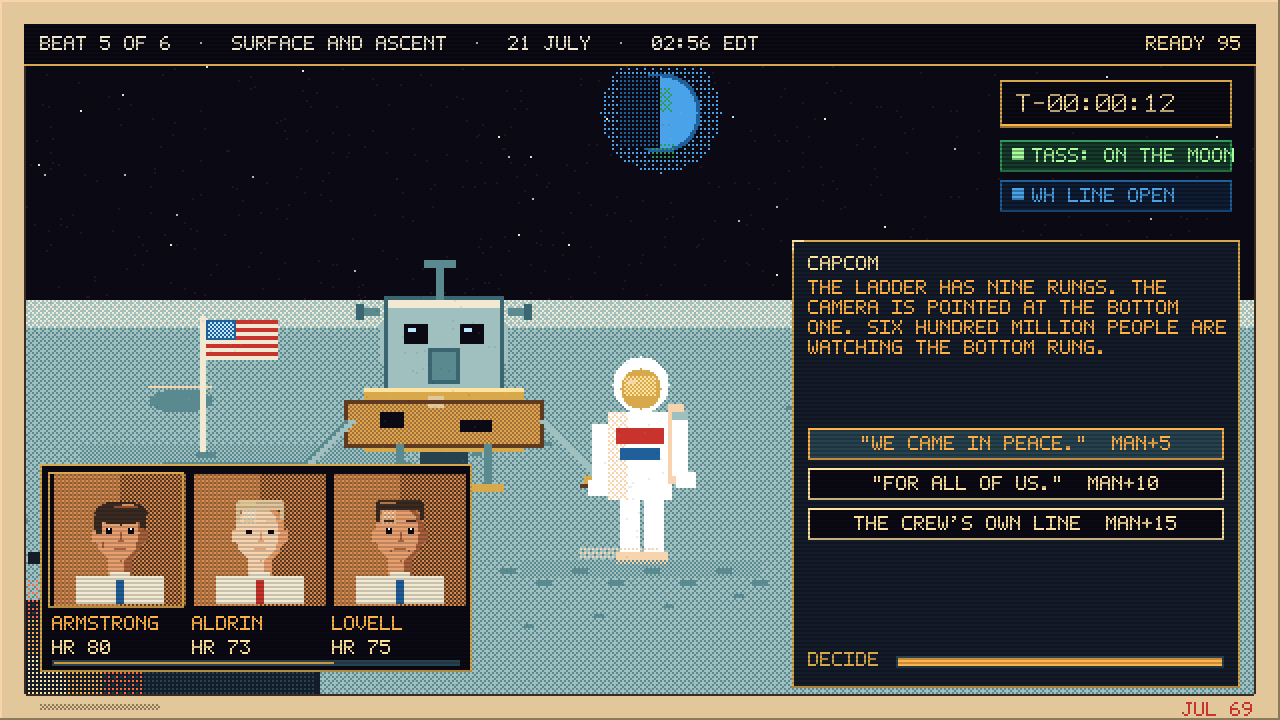
The ladder has nine rungs, and six hundred million people are watching the bottom one. There are four endings, and one way to get fired before you get there.
PLAY THE DEMO Free, in your browser. A full run takes about an hour, and it saves as you go.THIS IS A PLAYTEST
Every playtester so far has been an AI agent, or me. You'd be one of the first people to play it.
The demo keeps an anonymous record of each run: how far it got, how long it took, what was chosen and how it ended. No names, no cookies, no ads. It comes to me, and I use it only to tune the game.
Stop whenever you like. CONTINUE on the title screen picks your run back up in this browser.
TELL ME HOW IT WENT
ABOUT

I'm Jack Casady: a marketer who can't really code, a history nerd, and a board-game player with no time for board games right now.
I designed Before This Decade Is Out: the rules, the story and how every screen looks, in a design doc that grew to 48,000 words. Claude built the game from it. I played every build and sent back notes, mostly between nap times.
ALSO BY JACK
THE LONG TRAIL. Oregon Trail, but for your money: from your first real paycheck to the finish line, one decision at a time. Free in your browser, about five minutes.